Signed in as:
filler@godaddy.com
Botanical name: Zingiber officinale
Fresh ginger is one of my favourite examples of the overlap between food and traditional herbal practice.
Its distinctive spicy flavour comes from naturally occurring plant compounds, including gingerols.
Ginger has a long history of use for digestive discomfort and nausea.
Modern research has investigated ginger particularly in relation to nausea, although research into other proposed health benefits continues.
Many people enjoy ginger after meals or when their stomach feels unsettled.
It can be grated into meals or made into a simple infusion.
I wouldn't describe ginger as a weight-loss treatment.
That is exactly the type of claim I want us to move away from.
Instead, ginger can be part of a healthy eating pattern that makes nutritious food interesting and satisfying without relying heavily on sugar, salt or rich sauces.
Add fresh ginger to:
Or make a simple ginger infusion with hot water and fresh sliced ginger.
Food quantities of ginger are generally different from concentrated supplements.
Ginger can cause heartburn, diarrhoea and digestive discomfort in some people. If you take medication or are considering concentrated ginger products, check suitability with your pharmacist or healthcare professional.
Cinnamon is one of the easiest spices to incorporate into a midlife eating plan.
Its naturally sweet aroma can help make foods such as porridge, yoghurt and fruit taste indulgent without automatically reaching for extra sugar.
Cinnamon is frequently promoted online as a way of controlling blood glucose.
Research has produced interesting findings, but results are inconsistent and cinnamon should not be regarded as a treatment for diabetes.
If you have diabetes, don't replace prescribed treatment with cinnamon or another supplement.
Cinnamon doesn't burn body fat.
Where I find it useful is behavioural.
If cinnamon helps transform plain yoghurt, oats or fruit into something you genuinely enjoy eating, it can help make a nutritious eating pattern easier to maintain.
And sustainability matters far more than finding another supposed miracle ingredient.
Sprinkle cinnamon over:
Normal culinary use is different from taking large quantities or concentrated supplements.
Some cinnamon varieties contain coumarin, which can be problematic in excessive amounts, particularly for people with liver problems.
Botanical name: Curcuma longa
Turmeric has become one of the most heavily marketed herbs in wellness.
Its yellow colour comes partly from curcumin, one of the plant compounds that has attracted considerable research interest.
You'll frequently see turmeric described online as an anti-inflammatory cure-all.
The reality is more complicated.
Curcumin has been extensively studied, but supplement formulations, absorption and doses vary substantially.
Rather than treating turmeric as medicine in your kitchen, I encourage using it as one ingredient within a plant-rich eating pattern.
Warm your preferred milk with a small amount of turmeric, cinnamon and ginger.
Think of this as a comforting evening ritual rather than a medicinal treatment.
Food quantities and concentrated curcumin supplements are not equivalent.
Some concentrated or enhanced-absorption curcumin supplements have been associated with liver injury. Supplements may also be unsuitable during pregnancy or with particular medical conditions or medicines.
Peppermint has long been associated with digestion.
There's an important distinction, however, between peppermint tea and enteric-coated peppermint oil capsules.
Research supporting peppermint for some IBS symptoms primarily relates to peppermint oil preparations rather than simply drinking peppermint tea.
Because a warm, unsweetened drink can still form part of a relaxing after-meal routine.
For somebody trying to reduce high-sugar drinks or evening snacking, replacing them with herbal tea can also be a useful behavioural change.
Peppermint may aggravate reflux or heartburn in some people.
Persistent bloating, pain, altered bowel habits, unexplained weight loss or blood in the stool shouldn't simply be self-treated with herbs.
Kay's Safety Check
Seek medical advice.
Chamomile is strongly associated with relaxation and bedtime.
But there's an important difference between something being a pleasant relaxation ritual and claiming that it treats insomnia.
Evidence for chamomile specifically treating insomnia remains limited.
I still like chamomile for another reason.
A warm cup of caffeine-free tea can become a signal that the working day is ending.
Combine it with:
Now the tea is part of an entire sleep-supportive routine.
Chamomile can cause allergic reactions, particularly in people allergic to plants such as ragweed, daisies, chrysanthemums or marigolds.
Interactions with medicines, including warfarin, have also been reported.
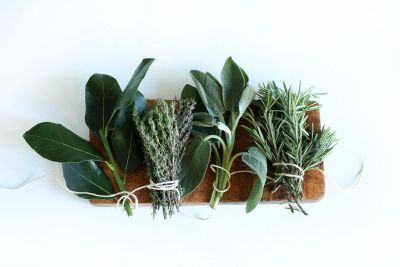
Sage is frequently associated with menopause, particularly hot flushes and sweating.
This makes it an interesting herb to discuss — but not one that I want to oversell.
Research into sage preparations for menopausal symptoms exists, but the evidence base is much less established than many marketing claims suggest.
Use culinary sage because you enjoy it.
Treat concentrated preparations differently and discuss them with an appropriate professional if you take medication or have health conditions.
Fresh or dried sage works beautifully with:
Menopause support should never be reduced to finding one herb.
Sleep, nutrition, physical activity, maintaining muscle, stress management and appropriate medical treatment all matter too.
Black cohosh is one of the best-known herbal products marketed for menopause.
Unlike ginger or cinnamon, I wouldn't treat this simply as a culinary ingredient.
Some research suggests certain black cohosh preparations may help some menopause symptoms, including hot flushes.
However, findings aren't consistent across all preparations and studies.
This is important because one black cohosh product isn't necessarily equivalent to another.
Rare reports of serious liver problems have occurred among people taking products labelled as black cohosh, although it isn't always clear whether black cohosh itself was responsible.
If you have liver disease, take medication, use HRT or have had a hormone-sensitive condition, seek individual professional advice before considering it.
Don't choose black cohosh simply because the label says "natural menopause support."
Ask:
What's actually in it?
What evidence supports it?
Could it interact with my treatment?
Is it appropriate for me?
That's informed self-care.
Red clover contains compounds known as isoflavones.
These belong to a broader group commonly described as phytoestrogens — plant compounds with some structural similarities to oestrogen.
That doesn't mean they behave exactly like the oestrogen produced by the human body.
Research findings have been inconsistent.
Some women may be interested in trying complementary approaches, but red clover shouldn't be presented as a guaranteed treatment for menopause.
Women with a history of hormone-sensitive conditions or those taking medicines should seek professional advice before using concentrated phytoestrogen supplements.
Food and supplements aren't automatically interchangeable.
Green tea may be one of the most misunderstood drinks in the weight-loss industry.
You'll see claims that it:
"melts belly fat"
"switches on metabolism"
or
"burns fat while you sleep."
That's not how sustainable weight management works.
Green tea contains plant polyphenols and caffeine and can certainly be part of a healthy dietary pattern.
Research into green-tea products has found, at most, modest effects on body weight in some studies, while other reviews conclude that the effect isn't clinically meaningful.
Because replacing a large sugary coffee, fizzy drink or high-calorie drink with unsweetened tea may reduce energy intake.
That's a practical behavioural benefit.
Green tea contains caffeine.
Concentrated green-tea extracts are very different from drinking normal brewed tea and require greater caution.
Fenugreek seeds are used widely in cooking and have also attracted research interest in relation to glucose metabolism.
Some studies suggest possible effects on blood glucose, but the research isn't strong enough to use fenugreek as a replacement for established diabetes treatment.
Fenugreek can add flavour to:
Large quantities or supplements can cause digestive symptoms and may lower blood glucose.
Fenugreek supplements aren't appropriate during pregnancy in quantities greater than those normally found in food.
Fennel has a distinctive mild aniseed flavour.
Both the bulb and seeds are used in cooking, while fennel tea is traditionally consumed after meals.
You'll sometimes see fennel marketed as a "flat tummy" or "detox" tea.
I don't use those descriptions.
Your liver and kidneys already perform sophisticated functions involved in processing and eliminating substances from the body.
Enjoy fennel because it adds plant variety, flavour and enjoyment to your diet.
Try:
Persistent bloating deserves investigation rather than endless detox teas.
Botanical name: Melissa officinalis
Lemon balm has traditionally been associated with calm and relaxation.
Rather than presenting it as a treatment for anxiety or insomnia, I like to place lemon balm within a broader evening relaxation routine.
Try a caffeine-free lemon balm tea while practising five minutes of slow breathing.
Sometimes the most valuable part of a wellbeing ritual isn't one active ingredient.
It's the permission you give yourself to stop.
Sit down.
Put the phone away.
Breathe.
Drink slowly.
Allow your nervous system some quiet.
That is the kind of habit that can become sustainable.Fennel: a beautiful addition to the digestive kitchen
Fennel has a distinctive mild aniseed flavour.
Both the bulb and seeds are used in cooking, while fennel tea is traditionally consumed after meals.
You'll sometimes see fennel marketed as a "flat tummy" or "detox" tea.
I don't use those descriptions.
Your liver and kidneys already perform sophisticated functions involved in processing and eliminating substances from the body.
Enjoy fennel because it adds plant variety, flavour and enjoyment to your diet.
Try:
Persistent bloating deserves investigation rather than endless detox teas.

Welcome! Simply register to eceive your FREE 7-Day Bloat Plan and exclusive invite to the "Happy Gut" Facebook group.
Your guide will be emailed to you separately.